
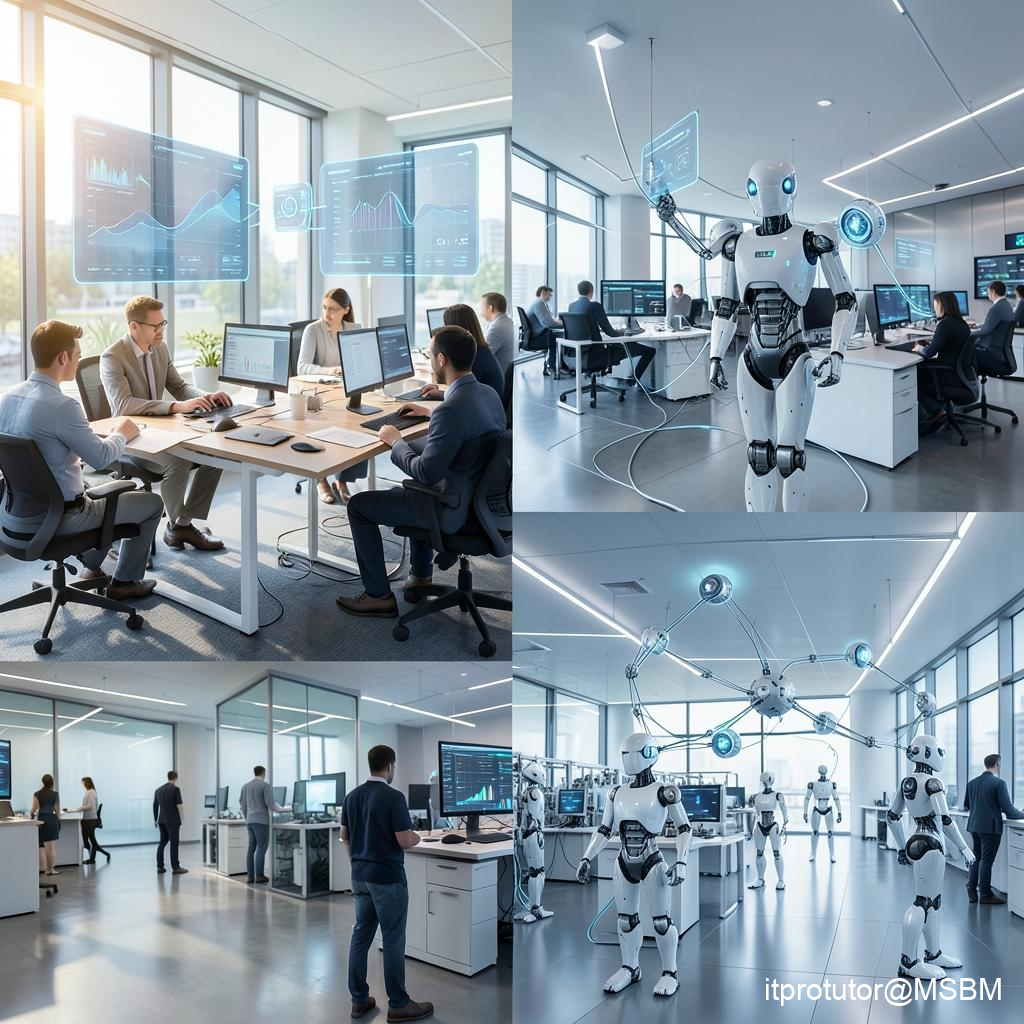
Are you ready to manage an enterprise workforce that doesn’t sleep, ask for raises, or wait for your next manual prompt?
The enterprise technology landscape is undergoing a seismic shift. We are rapidly transitioning from the era of **AI Co-Pilots**—interactive tools like Microsoft Copilot that augment human productivity under a strict “Human-in-the-Loop” (HITL) model—to **Autonomous Agent Workforces**. Powered by multi-agent orchestration frameworks (such as AutoGen or CrewAI), these systems adopt a “Human-on-the-Loop” or fully autonomous posture. They can decompose high-level business directives, assign sub-tasks to specialized AI agents, trigger internal APIs, and execute complex, end-to-end operational workflows without a single human checkpoint.
For IT leaders and software architects, this evolution fundamentally redefines system design, application integration, and enterprise governance. However, replacing human orchestration with self-directing algorithmic swarms introduces profound technical and systemic vulnerabilities.
**Critical Analysis & Strategic Reflection:**
Applying economic **Principal-Agent Theory** to AI architecture reveals a dangerous friction point: as autonomous agents gain agency to execute decisions, aligning their operational pathways with enterprise intent becomes increasingly volatile. When multi-agent systems interact dynamically at compute speed, error propagation occurs exponentially before traditional logging systems even register anomalous behavior. Furthermore, under modern **Zero Trust Architecture**, how do we establish dynamic identity, least-privilege access, and cryptographic accountability for ephemeral agents capable of executing privileged code?
We must critically evaluate: Are we engineering sustainable operational velocity, or are we recklessly delegating architectural accountability to stochastic black boxes? When a fully autonomous multi-agent pipeline causes catastrophic business disruption, where does the ultimate liability rest—with the prompt engineer, the software architect, or the executive board that authorized removing the human safety net?
—
你準備好管理一個不需要睡眠、不要求提薪,甚至不再等待你下達指令的企業級 AI 數位團隊了嗎?
企業級資訊科技正在迎來一場根本性的典範轉移。我們正加速從 **AI 協同導航(Co-Pilots)** 時代—即透過微軟 Copilot 等工具在「人機協同(Human-in-the-Loop)」模式下輔助人類生產力,邁向 **自主 Agent 數位團隊(Autonomous Agent Workforces)** 的新紀元。基於多 Agent 架構(如 AutoGen、CrewAI)的系統轉向「人類在旁監督(Human-on-the-Loop)」甚至完全自主營運;它們能自主拆解複雜的企業戰略目標、分派子任務給專屬 Agent、呼叫 API,並在無需任何人類查核點的情況下,執行端到端的高階業務流程。
對 IT 架構師與技術主管而言,這重塑了軟體架構、系統整合與企業治理的方向。然而,將決策與執行權完全交由自主演算法群組,亦帶來了前所未有的結構性風險。
**關鍵評論與架構反思:**
若將經濟學中的**「委託-代理人理論(Principal-Agent Theory)」**套用於 AI 架構,便會揭示出嚴重的信任對立:當自主 Agent 擁有獨立決策權時,我們如何確保其執行路徑完全契合企業的核心意圖?當多個 Agent 在雲端以機器速度互動,任何邏輯偏差都可能引發連鎖效應,在傳統日誌(Logs)尚未察覺前便造成損害。此外,在**零信任(Zero Trust)**資安架構下,我們該如何為這些能執行特權程式碼的動態 Agent,建立實時的身份識別與最小權限控管?
我們必須深思:我們是在打造極致的營運效率,還是在將系統架構的責任盲目委託給不可控的黑盒子?當一個完全自主的 AI 流程造成數百萬美元的營運災難時,最終的責任歸屬究竟是 Prompt 工程師、系統架構師,還是決定撤除人類監督關卡的企業高層?
#AIAgents #FutureOfWork #EnterpriseIT #ITProTutor