
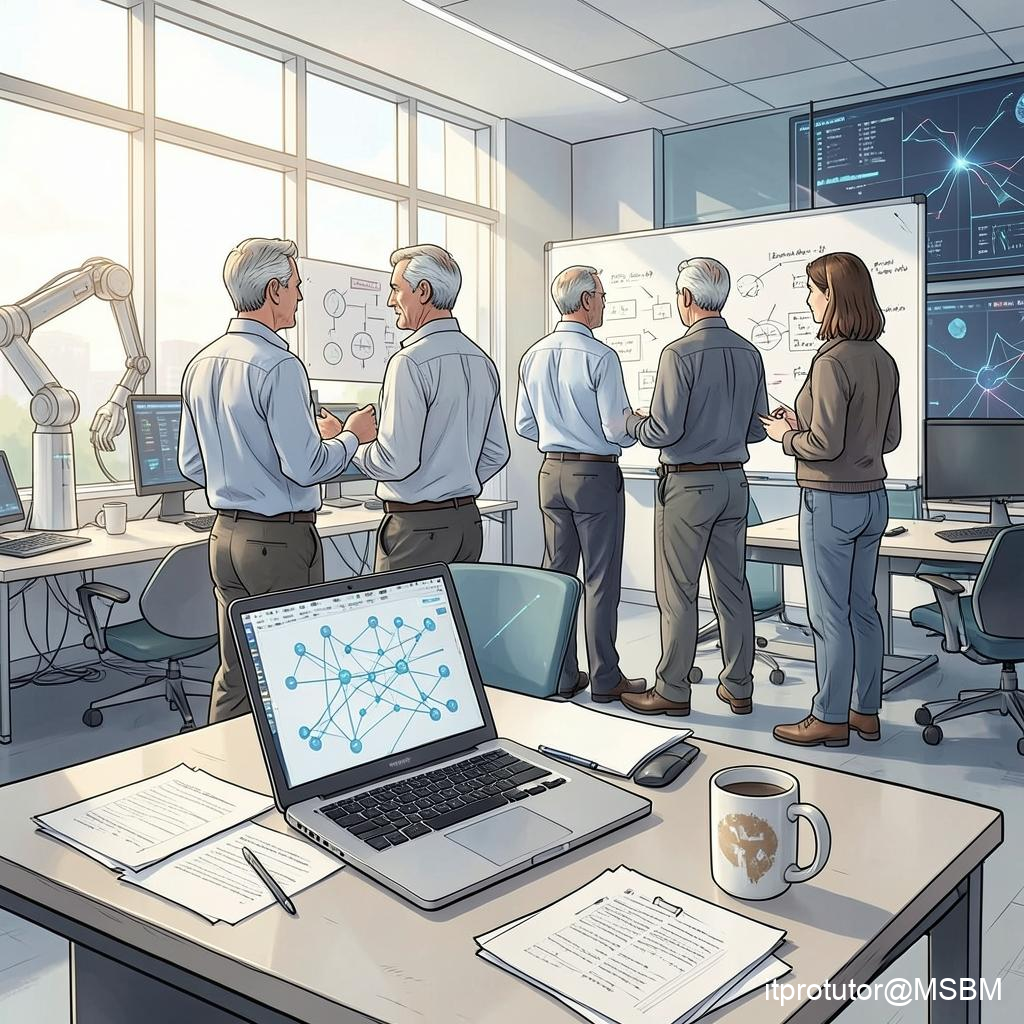
Is your sprint velocity high enough to outrun AI-driven corporate downsizing?
Across the global tech ecosystem, middle-aged Project Managers and Scrum Masters are standing in the crosshairs of sudden corporate restructuring. As Generative AI and intelligent workflow automation absorb routine orchestration—such as tracking tickets, compiling status reports, and enforcing process compliance—enterprise leadership is aggressively flattening organizational hierarchies. The uncomfortable truth is clear: the era of the purely operational “process facilitator” is closing. To remain indispensable, mid-career IT leaders must pivot toward Systems Architecture.
Systems Architecture bridges the gap between high-level business strategy and resilient technical execution. Unlike process management, which AI easily commoditizes, architecture requires deep structural design thinking, non-functional requirements trade-off analysis, and system decomposition—areas where AI serves as an amplifier rather than a replacement.
Consider **Conway’s Law**: *”Organizations design systems that mirror their communication structures.”* As AI disintermediates corporate communication directly between executive intent and engineering output, the middle-tier human relay becomes structural bloat. Furthermore, many Agile implementations have fallen victim to **Goodhart’s Law**—when velocity metrics and process adherence became the target instead of software craftsmanship, middle managers unwittingly rendered their own roles automatable.
This shift raises critical questions for every IT professional:
* Can a process-oriented manager successfully transition into a Systems Architect without returning to hands-on software development?
* As AI flattens middle management, are enterprises sacrificing long-term domain knowledge and mentorship for short-term operational efficiency?
* How are you actively rebuilding your technical moat to avoid becoming process redundancy?
***
你的敏捷衝刺速度(Sprint Velocity),跑得贏 AI 主導的企業裁員潮嗎?
在當前的科技生態系中,許多步入中年的 IT 專案經理(PM)與 Scrum Master 正首當其衝地面臨企業結構調整的危機。隨著生成式 AI 與自動化工作流迅速普及,過往由中階主管負責的進度追蹤、報告彙整與流程監督,正被系統極速取代,導致企業高層大幅推動組織扁平化。一個殘酷的現實已經擺在眼前:純粹依賴「流程協調」而缺乏硬技術背書的時代已經宣告結束。中階 IT 人才若要重塑不可替代性,關鍵轉型方向在於「系統架構(Systems Architecture)」。
系統架構連結了高階商業戰略與底層技術實踐。不同於容易被 AI 標準化的流程管理,系統架構需要複雜的設計思維、非功能性需求的權衡分析(Trade-off Analysis)以及系統解耦能力——這些正是 AI 無法取代、反而能成為架構師助力的高階領域。
從**康威定律(Conway’s Law)**的角度來看:「設計系統的組織,其產出的系統結構會重現組織的溝通結構。」當 AI 直接打破高層戰略與工程執行之間的溝通壁壘,傳統中階的「資訊轉發層」便成了組織結構上的冗餘。同時,許多敏捷流程也落入了**古德哈特定律(Goodhart’s Law)**的陷阱——當「燃盡圖」與「會議合規」被當成考核目標而非軟體工藝本身時,管理者便無意間將自己的工作變成了一套容易被 AI 自動化的腳本。
這引發了幾項值得深思的核心問題:
* 缺乏一手寫碼經驗的流程管理者,真能成功轉型為硬核的系統架構師嗎?
* 當企業為了短期效率而砍掉中階管理層,是否正在無意間犧牲長期領域知識(Domain Knowledge)的傳承與人才梯隊的培養?
* 在自動化協調的浪潮下,你打算如何重新構建自己的技術護城河?
#FutureOfWork #ITManagement #SystemsArchitecture #CareerTransition #ITProTutor