
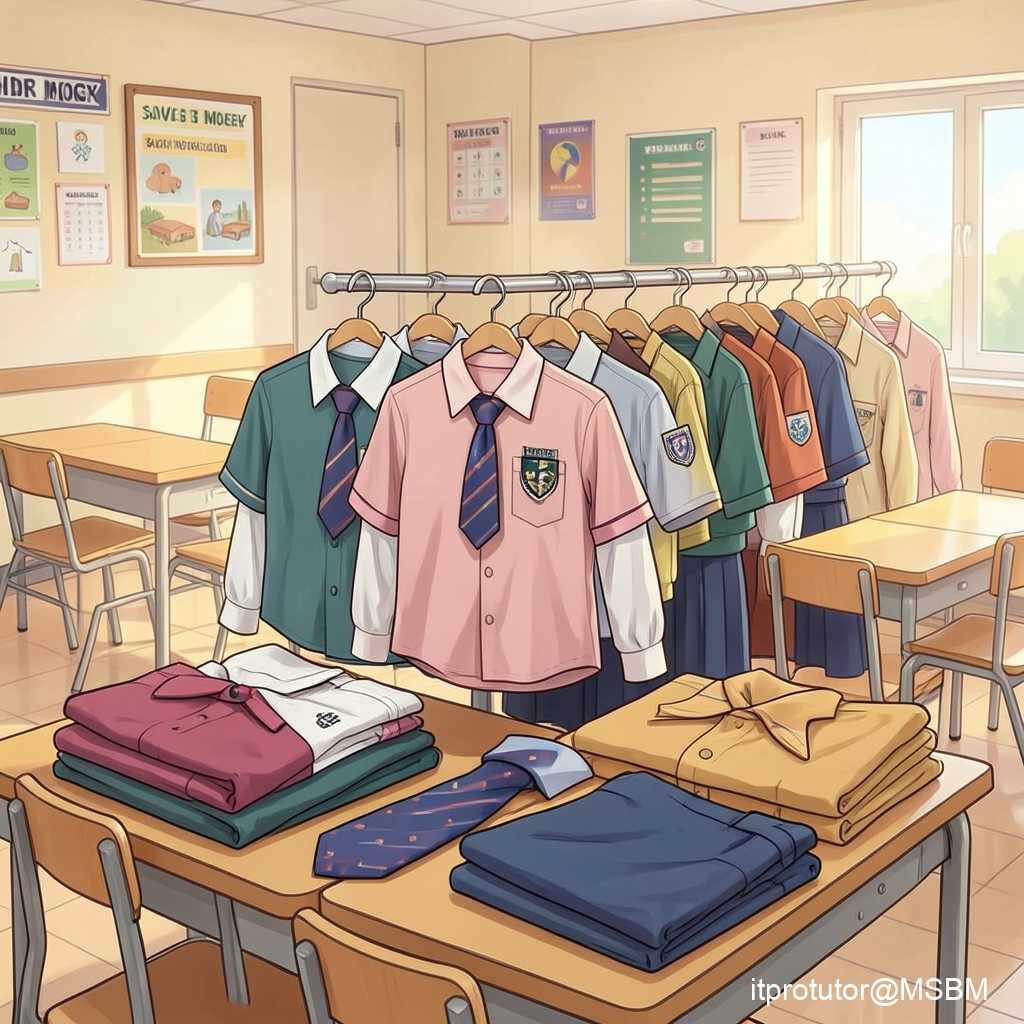
Are your household finances running an inefficient legacy system burdened by costly “vendor lock-in”?
The UK government’s new policy limits mandatory branded school uniform items to just three (plus a tie), significantly reducing financial overhead for families starting this September. From a systems architecture perspective, this policy shift represents a long-overdue refactoring of educational costs through **standardization** and **decoupling**.
For years, exclusive uniform contracts mirrored proprietary software monopolies—trapping parents in single-vendor ecosystems that drove prices up without improving functional output. Applying the **Pareto Principle (80/20 Rule)**, 80% of a uniform’s utility comes from generic, mass-produced components, while the 20% representing branded elements yields drastically diminishing returns at an inflated cost. By shifting toward open-market alternatives, the government is essentially introducing open standards to lower the total cost of ownership (TCO) for parents.
However, this policy optimization raises critical systemic questions: Will school administrators fully execute these new compliance guidelines, or will they find operational “loopholes” to maintain legacy agreements? Furthermore, how can we apply this same logic of eliminating proprietary dependencies to optimize our own technology budgets and daily workflows?
—
你的家庭財務系統是否正被低效且昂貴的「供應商鎖定」(Vendor Lock-in)拖累?
英國政府於九月實施的校服新規,限制學校要求的指定品牌項目不得超過三件(中學可另加領帶),旨在大幅降低家庭的財務負擔。從系統架構的角度來看,這項政策變革代表了一場透過「標準化」與「解耦」(Decoupling)來重構教育成本的必要優化。
多年來,獨家校服供應合約就像專有軟體的壟斷——將家長鎖定於單一供應商生態系中,在不提升實用功能的前提下推高了營運成本。若套用**帕累托法則(80/20 法則)**分析,校服 80% 的實用價值來自通用組件,而 20% 的品牌標籤卻帶來極低的邊際效益與高昂溢價。限制品牌數量等於導入「開放標準」,有效降低了家長負擔的整體擁有成本(TCO)。
然而,這項系統優化引發了深層思考:學校管理者會完全依規執行,還是會尋找營運上的「程式漏洞(Loopholes)」來維持舊有合約?我們又該如何將這種「擺脫專有依賴」的邏輯,應用於個人科技預算與工作流的優化中?
#EducationPolicy #CostOptimization #SystemDesign #ITProTutor
Source: BBC News
https://www.bbc.co.uk/news/articles/crrvq1y442vo?at_medium=RSS&at_campaign=rss